

Staying active is one of the most powerful ways to protect your long-term health and independence. But if you’re struggling to build a consistent fitness routine, you aren’t lacking willpower—you might need a gentler, smarter approach. Focusing on small, joint-friendly movements builds instant momentum, energizing your body instead of leaving you drained.
Set Realistic Goals for a Consistent Fitness Routine

Outcome goals focus purely on the finish line—like losing 10 pounds. Process goals, on the other hand, focus on the daily actions that get you there, like committing to a 15-minute morning mobility routine. Leading organizations like the National Academy of Sports Medicine (NASM) emphasize that focusing on the daily process takes the pressure off the scale while protecting your joints.
To keep daily habits realistic, the American Council on Exercise (ACE) recommends using the SMART framework: making your goals Specific, Measurable, Attainable, Relevant, and Time-bound. Instead of a vague goal like ‘I want to get fit,’ try: ‘I will perform 10 wall push-ups, three days a week, for the next month.’ This simple structure takes the guesswork out of your week and builds genuine confidence.
Ultimately, you train yourself to redefine what progress looks like by tracking functional milestones. Top fitness professionals highlight the importance of celebrating non-scale victories to maintain motivation. It looks something like this: Rather than measuring success by extreme intensity or heavy weights, set realistic performance goals based on your daily vitality. Notice how much easier it is to carry groceries, stand up from a low chair, or tackle a flight of stairs. Honoring these functional improvements provides the lasting momentum you need to stick with your routine as you age.
Find Movement That Feels Good
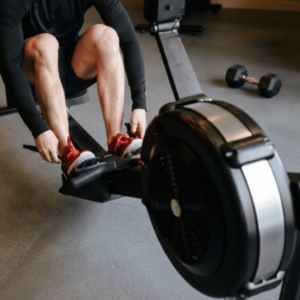
The old ‘no pain, no gain’ mindset is a shortcut to injury as you age. Exercise shouldn’t leave you hurting—it should invigorate your body, boost your daily energy, and safeguard your independence. As the American College of Sports Medicine (ACSM) points out, personal enjoyment is the single best predictor of whether you’ll stick with a routine long-term.
You won’t stick with a fitness plan if it feels like a painful chore. The National Academy of Sports Medicine (NASM) recommends focusing on functional, low-impact movements that go easy on your joints. Activities like brisk walking, cycling, water aerobics, or light resistance training deliver incredible cardio and muscle benefits with zero joint wear and tear.
Furthermore, the American Council on Exercise (ACE) encourages building a routine around self-efficacy by giving yourself permission to explore, modify, and adapt. Sometimes an exercise doesn’t feel right for your body. Adjusting the range of motion or swapping it for a gentler alternative is not a failure. It is smart, intuitive training. Finding movement that feels good means actively listening to your body’s feedback and cultivating a diverse routine you genuinely look forward to.
Track Your Vitality

The National Academy of Sports Medicine (NASM) emphasizes the importance of tracking biofeedback data rather than relying solely on the bathroom scale or heavy-lifting metrics. Shift your focus to ‘vitality metrics’—like sleep quality, morning energy, and reduced joint stiffness—rather than just the bathroom scale. When monitoring your effort using the Rate of Perceived Exertion (RPE) scale of 1 to 10, aim for 4 to 6 (moderate effort). If your workouts constantly push you into an 8 or 9, you’re overtaxing your joints and setting yourself up for burnout. Tracking and writing how you feel creates a much more positive and motivating feedback loop. In fact, these holistic markers reinforce the primary goal of your consistent fitness routine: to enhance your daily life and preserve your functional independence.
Keeping a simple daily journal to note how your joints feel and how your energy improves creates a powerful, positive feedback loop that keeps you coming back.
Finally, the American College of Sports Medicine (ACSM) notes that self-monitoring is one of the most effective behavioral strategies for long-term exercise adherence. However, the key is to track your consistency and your subjective well-being rather than just physical output. Keeping a simple daily journal where you jot down your movement for the day alongside your overall energy levels helps you identify powerful patterns. Over time, you will clearly see how your daily moderate movement directly correlates with greater stamina to enjoy your life.
Build a Community to Support Your Consistent Fitness Routine
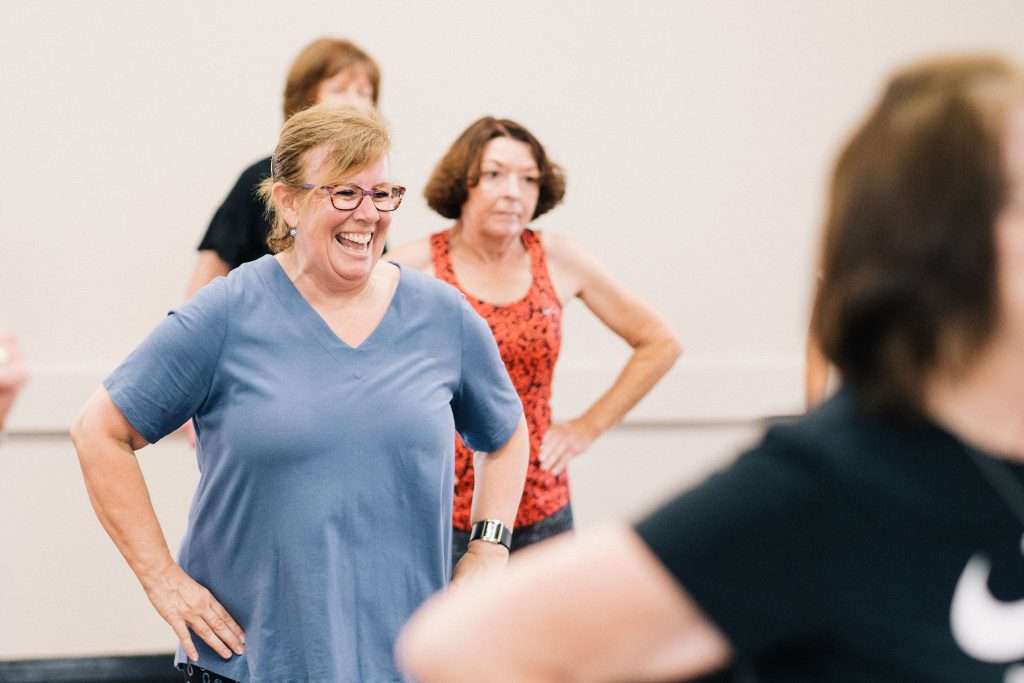
As we age, social support becomes increasingly important. According to the American College of Sports Medicine (ACSM), community is one of the most vital components for sticking with an exercise routine over the long haul. Transition your solitary workouts into engaging group activities. Consider joining a local walking group or a fitness class. Find a dedicated friend to work out with. You could even try pickleball, America’s fastest-growing sport. Exercising with a partner or group makes physical activity far less isolating. Plus, that extra push from your community is often exactly what you need to keep going on days when your motivation runs low.
Working out alongside peers who share similar goals normalizes the ups and downs of building a new habit. When you see others modifying movements to ease joint discomfort or celebrating small daily wins, it reinforces a key truth: you don’t have to do this alone, and you are fully capable of building strength at any age.
A Simple Weekly Starter Plan After 50
If you are trying to build a consistent fitness routine after 50, the goal is not to do everything at once. The goal is to create a weekly rhythm your body can recover from and repeat. If you are starting, even 10–15 minutes count. The win is showing up consistently, not exhausting yourself. For active aging, a well-rounded week should include:
- Cardio to support heart health and stamina
- Strength training to preserve muscle and protect joints
- Mobility work to keep movement comfortable
- Balance practice to reduce fall risk
- Recovery so your body can adapt
Not sure how to include everything in your week? Here is a flexible sample schedule to help you get started. Listen to your body—if your energy is low or your joints feel tender, adjust as needed. Your routine should energize your life, not drain it. Click or tap any day below to see the full breakdown:
Monday: Walk & Mobility Routine
20-minute walk + 5 to 10 minutes of gentle stretching focusing on Hip Mobility (e.g., Seated Figure-4 Stretch, Standing Hip Flexor Lunge, Seated Butterfly Stretch, Knee-to-Chest Stretch) and Shoulder Mobility (e.g., Doorway Chest Stretch, Cross-Body Shoulder Stretch, Overhead Wall Slide, Seated Eagle Arms)
Tuesday: Lower Body & Core Strength
20 minutes – Lower Body Exercises (e.g., Squats, Glute Bridges, Standing Side Leg Lifts, step-ups, calf raises) and Core Exercises (e.g., Bird-Dog, Standing Marches, Pallof Press with Band, Modified Forearm Plank, Dead Bug)
Wednesday: Active Recovery
15 minutes of light walking or cycling and gentle mat stretching (e.g., Cat-Cow, Child’s Pose, Seated Torso Twist, Hamstring Stretch, Supine Figure-4, Butterfly, Gentle Neck Rolls and Side Tilts, Seated Side Bend)
Thursday: Upper Body Strength and Balance
20 minutes – Upper Body Exercises (e.g., Wall Push-Ups, Seated Chest Press with Band, Overhead Press with Band, Seated Push-Ups, High Plank Hold, Row with Band, Face Pulls, Lat pull-down, Bicep Curls) and Balance Work (e.g., Single-Leg Stand, Tandem Stance or Heel-to-Toe Stand, Weight Shifts, Tightrope Walk or Heel-to-Toe Walk, Standing Clock Reach)
Friday: Longer Low Impact Cardio
20 to 30 minutes at a comfortable pace (e.g., Brisk Walking, Cycling, Indoor Rowing, Elliptical Trainer, Water Aerobics, Lap Swimming, Aerobic Dancing, Step Cardio)
Saturday: Fun Movement
Move your body in an enjoyable activity (e.g., Nature Stroll in Park, Walk along Beach or Lake Shoreline, Bird Watching Walk, Pickleball, Ping-Pong, Lawn Games, Social Dancing, Play with Grandchild, Gardening or Yard Care, Water Movement in Pool, Browse Museum or Market)
Sunday: Rest
Take this day to enjoy what you love (e.g., Family Time, Photography, Tending to House Plants, Park Picnic, Go to Local Nursery)
Feeling Overwhelmed by the Sample Schedule? You Don’t Have to Figure It Out Alone.

Looking at a full week of workouts—even a flexible one—can feel daunting if you’re recovering from injury, managing joint pain, or starting over from scratch. It is completely normal to feel unsure about where to begin or how to modify movements for your specific joints.
Building a consistent routine doesn’t have to be a solo journey. If you are looking for compassionate accountability and a mobility plan tailored specifically to your body, I am here to help. Let’s work together to protect your independence and keep you moving with confidence.
Helpful next steps
- Learn the mindset behind long-term active aging: Simple Ways to Stay Strong
- If weight management is part of your goal, read: Sustainable Weight Loss After 50
- Explore personalized active aging fitness coaching: Professional Coaching Services
- Contact Laura directly: Get in Touch Now!